
Mobile optical colour sorting
Sees what screening can't. Removes what gravity tables miss.
Ergot, bunt ball, blackgrass seed, discoloured grains — they share the size and density as good wheat. Traditional cleaning can't remove them. Optical colour sorting can, and does, at up to 30 tonnes per hour.
On-farm service
Full documentation
Performance Stats
Sort accuracy (single pass)
99.2%
Good seed loss rate
<0.5%
Throughput (wheat)
Up to 30 tonnes/hour
Camera colour resolution
16 million colours
Defect detection size
0.09mm
Air jet ejection speed
Milliseconds

How Optical Colour Sorting works
The science behind the sort. Powered by bühler Sortex.
Bühler Optical Colour Sorting combines high-speed imaging, intelligent colour recognition software and precision pneumatic ejection to separate material that no other manufacturer on the market can.
1. Pre-feeding & cleaning
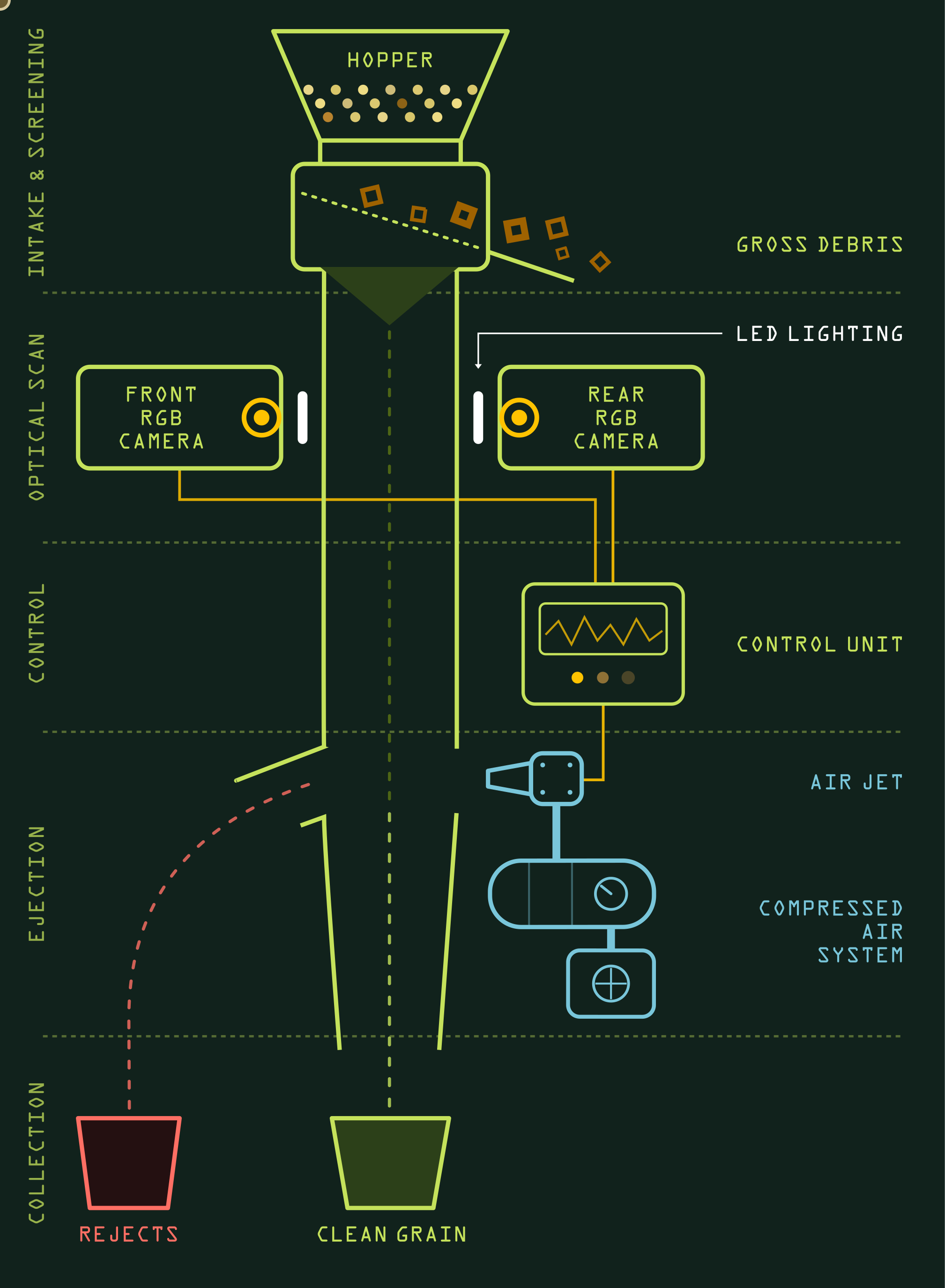
The grain is fed from your trailer into the machine hopper at a controlled, consistent rate. A high-capacity rotary pre-cleaner removes gross debris - clods, straw, chaff, stones and dust - before the grain enters the optical chamber. Having the sample pre-cleaned helps keep the inspection chamber cleaner allowing the cameras to see the sample and maximises sorting accuracy. Pre-cleaning throughputs reach 30 tonnes per hour for wheat.
2. Chute flow & camera inspection
Pre-cleaned grain falls down precision-engineered chutes in a controlled curtain. As each grain passes, a bank of high-resolution RGB cameras - one front, one rear - capture full-colour images at thousands of frames per second. The cameras can distinguish 16 million colours and detect defects as small as 0.09 mm. Every single grain is inspected, every pass.
3. Image processing & decision
The camera output feeds into a dedicated processing unit running proprietary sorting algorithms. The system compares each grain's colour profile against a configurable reference standard set by our operator. Ergot appears purple-black against wheat gold. Bunt balls are dark and rounded. Blackgrass seeds are smaller and off-white. The system flags each defect type in under a millisecond.
4. Pneumatic ejection
At the precise moment the identified reject grain reaches the ejection point, a targeted burst of compressed air, one of up to 360 independent air jets, fires and deflects goes into a separate waste stream. Good grain continues unimpeded. The ejection is so precise that only a few of the adjacent grains are affected, keeping good-seed loss typically below 0.5%.
5. Collection & weighing
Accepted grain is discharged into trailers or into tips. Every tonne is weighed on our inline flow scales.
Optical Colour Sorter Schematic
Why ergot is so difficult: Ergot bodies (sclerotia) have almost identical size and density to wheat grains, making them impossible to remove with sieves or gravity tables alone. Colour sorting is the only reliable method — ergot's purple-black colour is clearly detected by RGB cameras even at high throughput.


Optical sorting at 16m colour resolution

Powered by Bühler Sortex
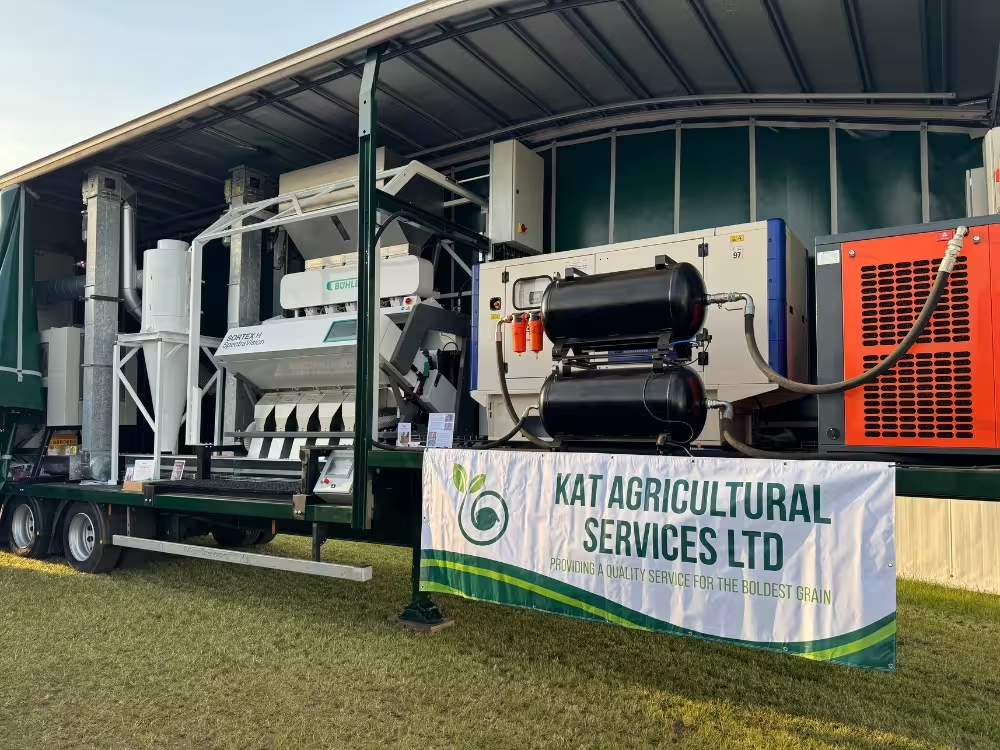
Our mobile unit comes to you
Contaminant removal
What we remove - and why it matters
Every contaminant listed below represents either a food safety risk, a market rejection risk, or a direct reduction in your seed quality and germination.
Ergot
Toxic alkaloids in ergot bodies pose serious human and animal health risks. UK and EU grain contracts have strict ergot limits — typically 0.05% by weight. Colour sorting achieves consistent removal to below detectable levels.
Bunt
Bunt-infected grains are dark, misshapen and emit a strong fishy smell. Even low levels cause wholesale rejection of grain consignments. Colour sorting detects bunt balls by their distinctive dark colour and shape.
Blackgrass seed
Blackgrass in a seed lot is a serious compliance failure and agronomic problem. The seeds are small and off-white — colour sorting detects them where sieve separation fails due to similar dimensions to wheat grain.
Fusarium-damaged grains
Fusarium-infected grains appear pink, red or shrunken. Poor germination and DON mycotoxin risk make removal essential. Colour sorting identifies characteristic discolouration that no screening method can address.
Wild oats (Avena fatua)
A persistent grassweed causing significant yield loss. Wild oat seeds are larger and darker than cultivated oats - readily identifiable by colour cameras at full processing speed.
Off-type & foreign crop seeds
Admixture from previous crops - rye grass, charlock, poppy - can cause contract failure or varietal impurity. Where colour differences exist, optical sorting provides highly effective single-pass separation.

